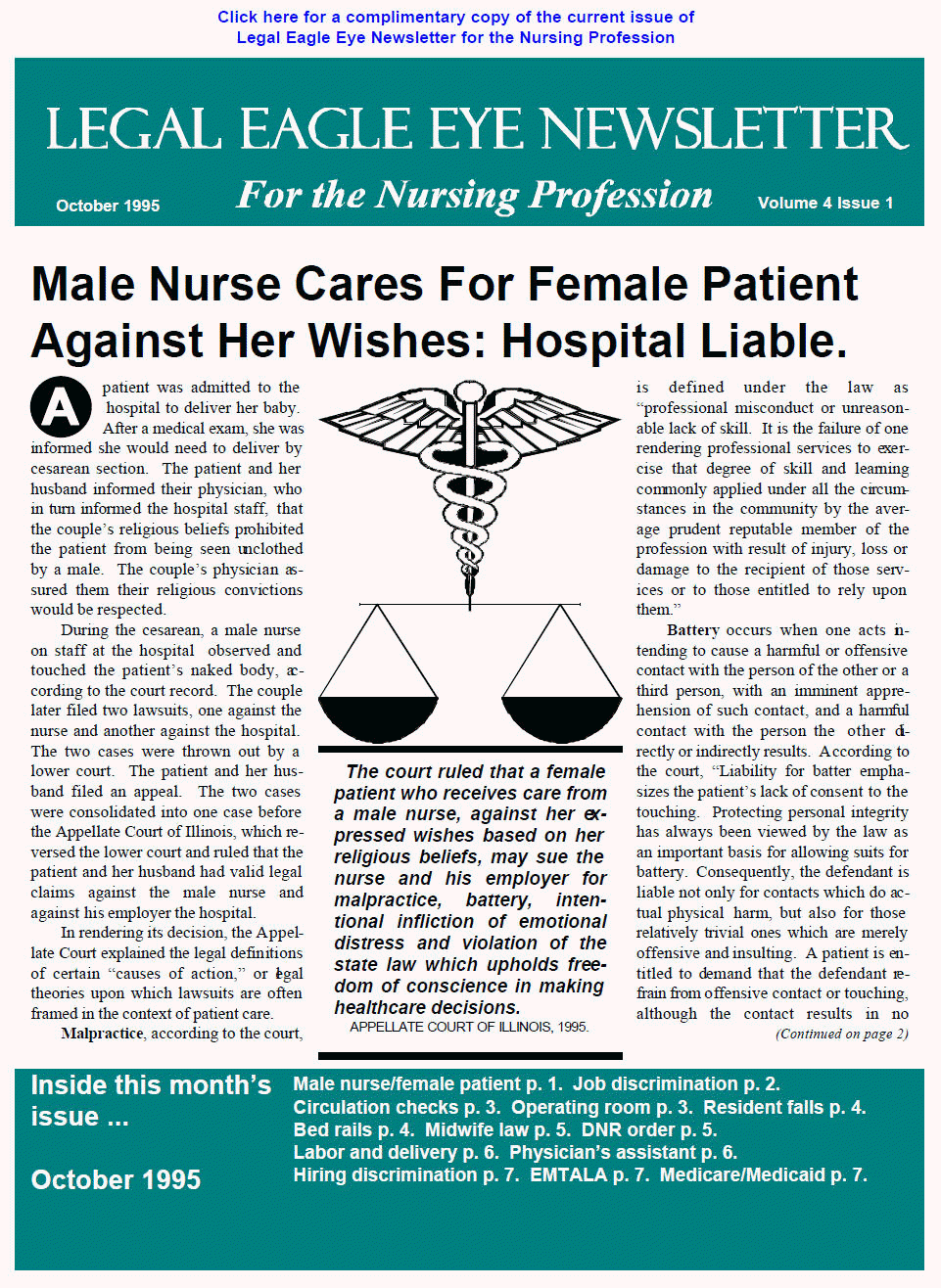
Quick Summary: A female patient who receives care from a male nurse against her expressed wishes based on her religious beliefs, may sue the nurse and his employer for malpractice, battery, intentional infliction of emotional distress and violation of the state law which upholds freedom of conscience in making healthcare decisions. APPELLATE COURT OF ILLINOIS, 1995.
A patient was admitted to the hospital to deliver her baby. After a medical exam, she was informed she would need to deliver by cesarean section. The patient and her husband informed their physician, who in turn informed the hospital staff, that the couple’s religious beliefs prohibited the patient from being seen unclothed by a male. The couple’s physician assured them their religious convictions would be respected.
During the cesarean, a male nurse on staff at the hospital observed and touched the patient’s naked body, according to the court record. The couple later filed two lawsuits, one against the nurse and another against the hospital. The two cases were thrown out by a lower court. The patient and her husband filed an appeal. The two cases were consolidated into one case before the Appellate Court of Illinois, which reversed the lower court and ruled that the patient and her husband had valid legal claims against the male nurse and against his employer the hospital.
In rendering its decision, the Appellate Court explained the legal definitions of certain "causes of action," or legal theories upon which lawsuits are often framed in the context of patient care.
Malpractice, according to the court, is defined under the law as "professional misconduct or unreasonable lack of skill. It is the failure of one rendering professional services to exercise that degree of skill and learning commonly applied under all the circumstances in the community by the average prudent reputable member of the profession with result of injury, loss or damage to the recipient of those services or to those entitled to rely upon them."
Battery occurs when one acts intending to cause a harmful or offensive contact with the person of the other or a third person, with an imminent apprehension of such contact, and a harmful contact with the person the other directly or indirectly results. According to the court, "Liability for batter emphasizes the patient’s lack of consent to the touching. Protecting personal integrity has always been viewed by the law as an important basis for allowing suits for battery. Consequently, the defendant is liable not only for contacts which do actual physical harm, but also for those relatively trivial ones which are merely offensive and insulting. A patient is entitled to demand that the defendant refrain from offensive contact or touching, although the contact results in no physical injury.
Intentional infliction of emotional distress means "extreme and outrageous conduct, intent by the defendant to cause emotional distress, severe or extreme emotional distress suffered by the patient and an actual cause-and-effect relationship between the emotional distress to the patient and the defendant’s outrageous conduct."
The Appellate Court also made refence to a state law known as the Right of Conscience Act, which is meant to respect and protect the right of all persons to refuse to obtain, receive or accept the delivery of healthcare services, based on a sincerely held set of moral convictions arising from belief in and relation to God.
The Appellate Court noted that the patient was not trying to impose her religious beliefs upon anyone. When she informed the hospital of her moral and religious beliefs against being seen and touched by males, the hospital was free to refuse to accede to her demands. However, when this patient made her wishes known to the hospital, it agreed, at least implicitly, to provide her with care within the restrictions placed by her religious beliefs, according to the court.
The court said this couple’s deeply ingrained religious beliefs, even though not shared by the majority of society, do not deserve less protection than more mainstream religious beliefs.
Cohen vs. Smith, 648 N.E. 2d 329 (Ill. App., 1995).More from nursinglaw.com
http://www.nursinglaw.com/discrimination-male-nurse.htm
http://www.nursinglaw.com/malediscrim.htm
http://www.nursinglaw.com/malediscrim2.htm